

Imagine waking up to a foot of fresh snow on the Wasatch Front only to realize your living room is just as cold as the porch. It’s the ultimate winter nightmare for any homeowner. Whether you’re worried about a sudden furnace failure during a blizzard or you’re just tired of those massive utility bills, preparing your HVAC for winter in Ogden is the best way to stay ahead of the freeze.
We understand that the transition to colder months can feel stressful. You’re likely wondering if you should cover that outdoor AC unit or how the new 2026 Utah energy code changes affect your home’s efficiency. The good news is that a few smart moves now can lead to lower energy bills and total peace of mind all season long. It’s about making your home a reliable sanctuary when the temperatures drop.
This checklist gives you a professional-grade strategy to winterize your system effectively. You’ll learn how to navigate the latest insulation requirements, maximize 2026 rebates like Rocky Mountain Power’s “Wattsmart” program, and ensure your equipment lasts for years to come. Let’s get your home ready for whatever the Utah winter throws your way.
Key Takeaways
- Beat the rush by testing your heating cycle before it hits 40°F to ensure your home stays cozy during that first major Ogden snowstorm.
- Save money by mastering the “Total Comfort” strategy for preparing your hvac for winter in Ogden, focusing on both mechanical health and your home’s insulation.
- Learn the difference between simple DIY filter swaps and the critical professional checks, like heat exchanger inspections, that keep your family safe.
- Get our expert verdict on whether you should actually cover your outdoor AC unit and how to protect your exterior water lines from freezing.
- Discover how a “Fast & Clean” professional tune-up respects your time while prepping your system for the heavy runtime of a Wasatch Front winter.
Why Ogden Winters Demand Early HVAC Preparation
Living along the Wasatch Front means dealing with some of the most volatile winter weather in the country. One day it’s a crisp 45 degrees, and the next, a canyon wind brings a sub-zero deep freeze that lasts for a week. Your furnace doesn’t just provide a bit of warmth; it’s the only thing standing between your family and the harsh reality of a Utah winter. Because of these extreme conditions, preparing your hvac for winter in Ogden isn’t just a suggestion. It’s a necessity for your safety and your wallet.
The most expensive mistake Ogden homeowners make is waiting for the first snow to test their system. When the first major storm hits, HVAC companies across Weber County get flooded with hundreds of calls simultaneously. If your furnace fails then, you’ll likely face long wait times and higher costs for emergency service. By being proactive, you avoid the “panic tax” and ensure your home stays warm when the mountains turn white. A well-maintained system also helps you navigate the complex world of Heating, ventilation, and air conditioning (HVAC) without the stress of a mid-blizzard breakdown.
We also have to consider our local air quality. Ogden’s famous winter inversions don’t just stay outside. They trap fine particulate matter in the valley, which eventually finds its way into your home’s ductwork. Your furnace filters work overtime during these periods. If they’re already dirty from the summer, your system will struggle to breathe. This leads to higher utility bills and significantly increases the risk of needing an emergency furnace repair in Layton or Ogden during the coldest months of the year.
Understanding the Wasatch Front Deep Freeze
Sub-zero nights in Weber County put immense pressure on your equipment, especially on older heat exchangers that have already seen years of service. When the mercury drops, your furnace cycles more frequently and for longer durations. This constant operation can expose underlying weaknesses that weren’t visible during the mild autumn days.
Thermal stress is the physical expansion and contraction of system components caused by Ogden’s rapid 40-degree daily temperature swings. Over time, this movement can lead to metal fatigue and cracks. Additionally, the bone-dry Utah air makes 70 degrees feel much colder than it actually is. Proper humidity control helps your home retain heat better, allowing your HVAC system to work smarter, not harder. Taking these steps now ensures your equipment survives the heavy runtime expected in 2026.
The Essential Furnace and AC Winterization Checklist
Success in preparing your hvac for winter in Ogden comes down to a proactive routine. You don’t need a degree in mechanical engineering to get started, but you do need to be thorough. Follow these five steps before the first major cold front rolls off the mountains to keep your system running smoothly.
- Step 1: Test the heating cycle early. Turn your thermostat to “heat” and set it a few degrees above the room temperature while it’s still 50 or 60 degrees outside. It’s better to find a glitch now than when it’s 15 degrees at midnight.
- Step 2: Replace your air filters. Your furnace will run significantly more in January than it did in October. A fresh filter ensures maximum airflow and prevents the blower motor from overheating.
- Step 3: Clear the perimeter. Remove dead leaves, pine needles, and summer debris from around your outdoor AC unit. Also, check your furnace exhaust vents on the side of your house. Snow or debris blockages there can cause an immediate system shutdown.
- Step 4: Check the ignition. For older gas furnaces, ensure the pilot light is a steady, strong flame. For modern systems, listen for the click and hum of the electronic ignition.
- Step 5: Safety first. Test your carbon monoxide detectors. Since your home is sealed tight in winter, these devices are your most important line of defense.
Mechanical Checks You Can Do Yourself
Take a moment to listen to your furnace while it operates. A healthy system should have a consistent, low hum. If you hear banging, it might indicate a delayed ignition issue. High-pitched whistling often means your system is “starving” for air, usually due to a clogged filter or a closed vent. You should also perform a “Visual Flame Test” if your furnace has a viewing window. You want to see a steady, crisp blue flame. If the flame is flickering, yellow, or orange, it’s a sign of incomplete combustion and requires professional attention immediately to avoid safety risks.
Thermostat Calibration for Utah Winters
Your thermostat is the brain of your home’s comfort. For the “Ogden Workday,” we recommend setting the temperature back about 7 to 10 degrees while you’re away at work. This simple habit can save you up to 10% on your annual heating costs. You can find more helpful advice in these Fall and Winter Energy-Saving Tips from the Department of Energy.
If you’re still using an old manual slider, you’re likely losing money every month. Modern thermostat upgrades in Layton and Ogden allow you to control your home’s climate from your phone, ensuring you never return to a freezing house. Just remember the 55-degree rule: never set your thermostat lower than 55 degrees, even when you’re on vacation. Anything lower puts your pipes at risk of freezing during a deep Weber County frost. If your system seems to be struggling to hit your target temperature, it might be time for a professional HVAC health check to ensure everything is calibrated perfectly.
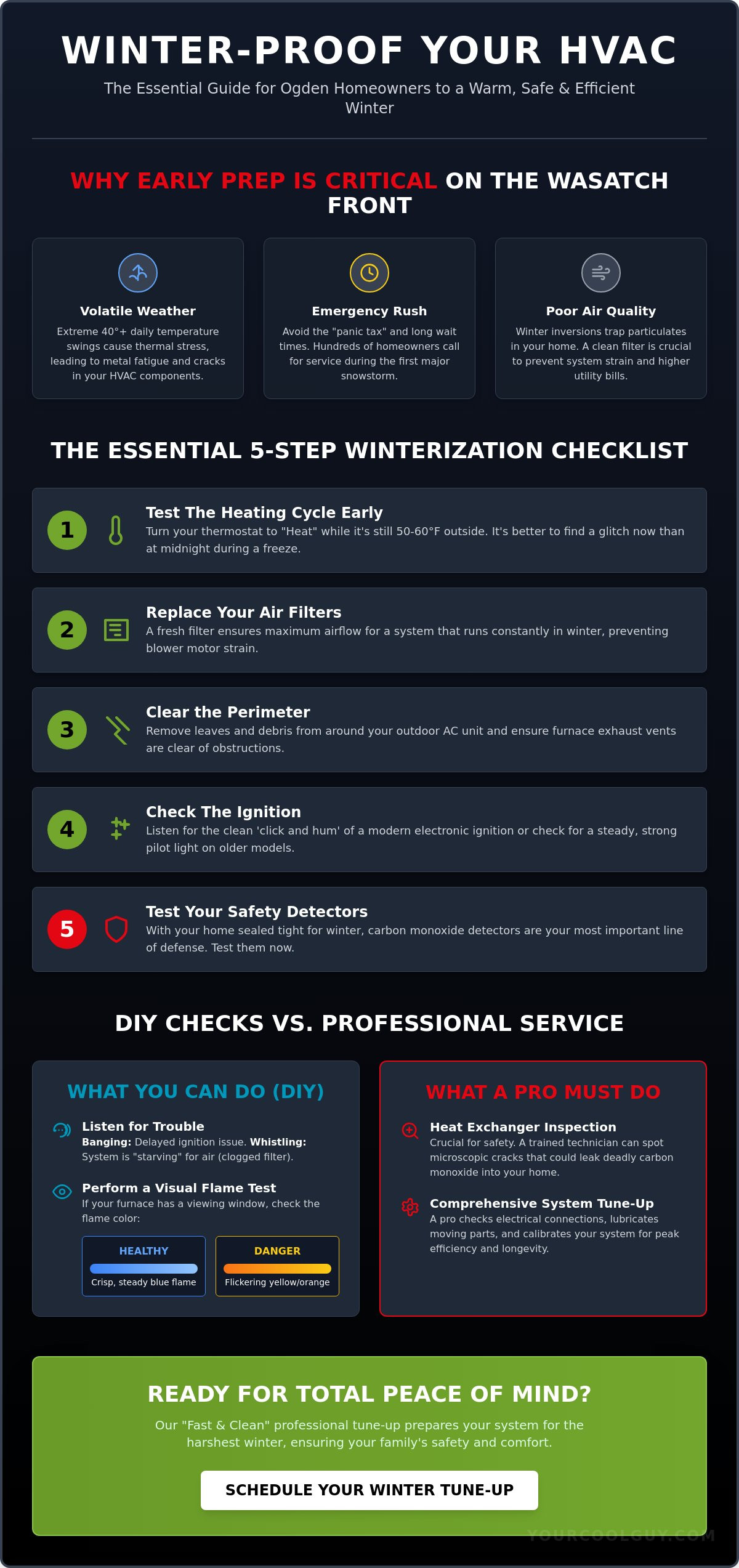
DIY Maintenance vs. Professional Tune-Ups: What Really Matters?
Think of preparing your hvac for winter in Ogden as a team effort. You handle the daily habits that keep the system breathing, and we handle the technical heavy lifting that keeps it safe. This partnership is the secret to a warm home and a low utility bill. You can find great advice on how to save money on heating and cooling from the FTC, but knowing where your DIY tasks end and professional service begins is vital for your system’s health.
Your side of the checklist is straightforward. You should change your air filters every 30 to 90 days, especially during the peak of a Wasatch Front winter. Make sure your floor vents aren’t blocked by new holiday rugs or furniture. Finally, keep your thermostat on a consistent schedule. These small actions prevent unnecessary strain on your blower motor and keep the air flowing freely through your home.
Our side of the checklist involves precision tools and years of experience. We don’t just look at the furnace; we calibrate gas pressure, test electrical connections for wear, and deep-clean the internal components. This level of care is the most effective way to prevent a middle-of-the-night emergency furnace repair in Layton or Ogden. Plus, there’s the “Warranty Trap” to consider. Most manufacturers require documented professional maintenance to keep your equipment coverage active. If a major component fails and you haven’t had a pro look at it, you might be stuck paying the full price for a replacement.
The Safety Factor: Carbon Monoxide and Gas Leaks
Safety is the biggest reason to call in a professional. A cracked heat exchanger is a serious hazard that is often invisible to the untrained eye. These microscopic fractures can allow carbon monoxide to seep into your ductwork and circulate through your house. We use advanced combustion analyzers to detect even the smallest trace of CO, ensuring your family stays safe while the doors and windows are sealed tight for the winter.
Our technicians also pay close attention to your system’s fuel mixture. Professional gas pressure adjustment is vital for high-altitude Ogden homes because the thinner mountain air requires a specific fuel-to-oxygen ratio to ensure clean and efficient combustion. Without this precise calibration, your furnace will struggle to produce heat, leading to higher bills and increased wear on the burners. We make sure your system is tuned specifically for the unique environment of Weber County.
Beyond the Heater: Protecting Your Home Envelope
Your furnace can only do so much if your house is leaking heat like a sieve. Success in preparing your hvac for winter in Ogden means looking at your “home envelope,” which is the physical barrier between your cozy living room and the biting canyon winds. When this envelope has gaps—whether from poor insulation or a roof in need of professional work from experts like United Roofing & More!—your furnace works up to 30% harder just to maintain a steady temperature. This extra strain doesn’t just raise your bills; it’s a fast track to a mechanical breakdown in the middle of January.
Protecting the exterior of your home is a vital part of this process; for example, Supreme Roofing and Reconstruction notes that durable siding and a solid roof are your first lines of defense against the biting winter air.
One of the biggest culprits of heat loss is the “Stack Effect.” Think of your home like a chimney. Warm air naturally rises and looks for any exit through your ceiling or attic. If your attic isn’t properly insulated, you’re essentially paying to heat the neighborhood birds. To stay ahead of the 2026 Utah energy code, focus on “The Big Three”: attics, crawl spaces, and exterior water lines. For example, the new standards require a minimum of R-38 insulation for ceilings. Meeting these levels ensures your furnace doesn’t have to fight a losing battle against physics.
The Outdoor AC Unit: Utah Winter Survival
To cover or not to cover? It’s the question every Ogden homeowner asks. Here is our professional verdict: avoid those heavy, floor-length plastic covers. They trap moisture against the metal, which leads to rust and electrical corrosion. Even worse, they create a perfect, wind-shielded hotel for rodents that love to chew through your wiring. Instead, use a “top-only” cover or a simple piece of plywood weighted down with a brick. This protects the fan from heavy snow and falling icicles while allowing the unit to breathe. Also, keep an eye on the “Ice Moat.” Ensure snow doesn’t pile up so high that it blocks the drainage around the base of your condenser.
Sealing the Leaks
Finding drafts in Ogden’s older historic homes can feel like a game of hide-and-seek. You can find hidden leaks by using the “Incense Stick Test.” Simply light a stick and walk past windows, doors, and electrical outlets. If the smoke wafts sideways, you’ve found a leak. Weatherstripping these areas offers a massive return on investment, often paying for itself in a single season. However, there’s a delicate balance to maintain. If you seal a home too tight without considering indoor air quality in Ogden, you might end up with stale air or moisture issues. If you aren’t sure where your home stands, we can help you find that perfect middle ground. Schedule a home comfort audit today to ensure your envelope is as ready as your heater.
E.R.S. Heating & Cooling: Fast & Clean Winter Prep
We’ve spent over 20 years navigating the specific quirks of Weber County homes. From the historic bungalows near 25th Street to the newer builds in the foothills, we know exactly how the local climate treats your equipment. When preparing your hvac for winter in Ogden, you deserve a partner who understands the urgency of a Utah cold front. We don’t just show up; we bring two decades of local expertise to every doorstep.
Our “Fast & Clean” promise is the core of how we work. We know your time is valuable, and your home is your sanctuary. Our technicians arrive on schedule, work efficiently, and leave your space exactly as they found it. No muddy boot prints, no leftover debris, and no complicated corporate jargon. We focus on providing a smooth, professional experience that takes the stress out of seasonal maintenance. For those who want to “set it and forget it,” our maintenance agreements automate your prep work so you never miss a tune-up.
Even with the best preparation, Ogden weather can be unpredictable. That’s why we provide 24/7 emergency support when the conditions turn extreme. If your furnace fails during a midnight blizzard, you aren’t alone. We’re ready to restore your comfort and safety at any hour. It’s about providing the peace of mind that comes with knowing a local expert has your back all winter long.
Commercial Refrigeration: Don’t Forget the Business
Homeowners aren’t the only ones who need to worry about the freeze. Ogden’s local restaurants and facilities often face unique challenges when the temperature drops. Outdoor ice machines and walk-in coolers are particularly vulnerable to freezing lines and pressure fluctuations. In fact, requests for commercial refrigeration repair in Ogden typically spike during the very first hard freeze of the season.
We specialize in winterizing these critical systems to prevent costly downtime. Our team handles everything from walk-in cooler maintenance to specialized cryogenic equipment service. A proactive check now ensures your inventory stays safe and your operations keep running smoothly, regardless of the snow piling up outside. Don’t wait for a system failure to realize your outdoor components weren’t ready for the sub-zero nights.
The E.R.S. Difference in Weber County
We pride ourselves on being a family-owned business that utilizes high-tech diagnostic expertise. You get the personal touch of a neighbor combined with the precision of modern HVAC technology. Our service area is broad, reaching from Plain City and North Ogden down to South Weber and everywhere in between. We’re committed to keeping our community warm, one home and business at a time. Schedule your winter HVAC tune-up with E.R.S. today!
Secure Your Comfort Before the First Snow
Taking the time for preparing your hvac for winter in Ogden is the smartest move you can make for your home this season. By addressing small issues like air filters and thermostat settings now, you prevent the high-stakes stress of a mid-blizzard breakdown. A well-sealed home envelope and a professional furnace check-up are your best defenses against the volatile weather along the Wasatch Front. These steps ensure your system runs efficiently while keeping your energy costs in check.
At E.R.S. Heating & Cooling, we bring over 20 years of local experience to every Ogden doorstep. We’re committed to our “Fast & Clean” service guarantee, which means we respect your home as much as we respect your time. If the unexpected happens during a sub-zero night, our 24/7 emergency service is always available to get your heat back on. You deserve the peace of mind that comes with a reliable, winter-ready system.
Don’t wait for the freeze; book your Ogden HVAC winter tune-up now! Let’s make sure your home stays a warm, cozy sanctuary all season long.
Frequently Asked Questions
Should I cover my air conditioner for the winter in Ogden?
You should avoid using full-length plastic covers on your AC unit. These covers trap moisture against the metal components, which leads to rust and attracts rodents looking for a winter home. A top-only cover or a simple piece of plywood is much better. This approach protects the fan from heavy Ogden snow while allowing the unit to breathe properly.
How often should I change my furnace filter during a Utah winter?
You should change your furnace filter every 30 to 90 days during the peak heating season. Since your system runs more frequently in January and February, the filter clogs faster with dust and indoor pollutants. Keeping a fresh filter is a key part of preparing your hvac for winter in Ogden to prevent the blower motor from overworking and failing.
What is the best thermostat setting for a winter night in Ogden?
The ideal daytime setting is 68°F, while 60°F to 62°F is perfect for when you’re sleeping or away from home. Never set your thermostat below 55°F during a Weber County winter. Keeping the temperature at least 55°F ensures your pipes don’t freeze and burst during a sub-zero night, even if you’re trying to save on energy costs.
Why is my furnace blowing cold air when it first starts?
It is normal for your furnace to blow cool air for the first minute or two of a cycle. The fan starts moving air through the ducts before the heat exchanger reaches its full operating temperature. If the air stays cold for more than five minutes, you might have a pilot light or ignition failure that requires a professional check.
How do I know if my furnace heat exchanger is cracked?
You usually can’t see a crack without specialized tools, but signs include excessive soot inside the unit or a flickering yellow flame. If your carbon monoxide detector goes off, it’s a major red flag. Because these cracks are often invisible to the untrained eye, professional inspections are the only way to guarantee your family’s safety.
Does E.R.S. offer emergency furnace repair in Ogden on weekends?
Yes, we provide 24/7 emergency furnace repair throughout the Ogden area, including weekends and holidays. We know that heaters don’t always wait for business hours to fail. Our team is always ready to respond when the Utah weather turns extreme and your family’s comfort is at risk.
Can a dirty HVAC filter cause my heating bill to go up?
A dirty filter can absolutely cause your heating bill to spike by forcing the blower motor to work much harder. When airflow is restricted, the system has to run for longer cycles to reach your target temperature. This inefficiency is one of the most common reasons for high utility bills when preparing your hvac for winter in Ogden.
What should I do if my furnace stops working during a snowstorm?
First, check your thermostat batteries and your electrical breaker panel to ensure everything is powered on. You should also step outside and make sure your furnace exhaust vents aren’t blocked by drifting snow. If those quick fixes don’t work, call a professional immediately to prevent your home’s internal temperature from dropping to dangerous levels.