

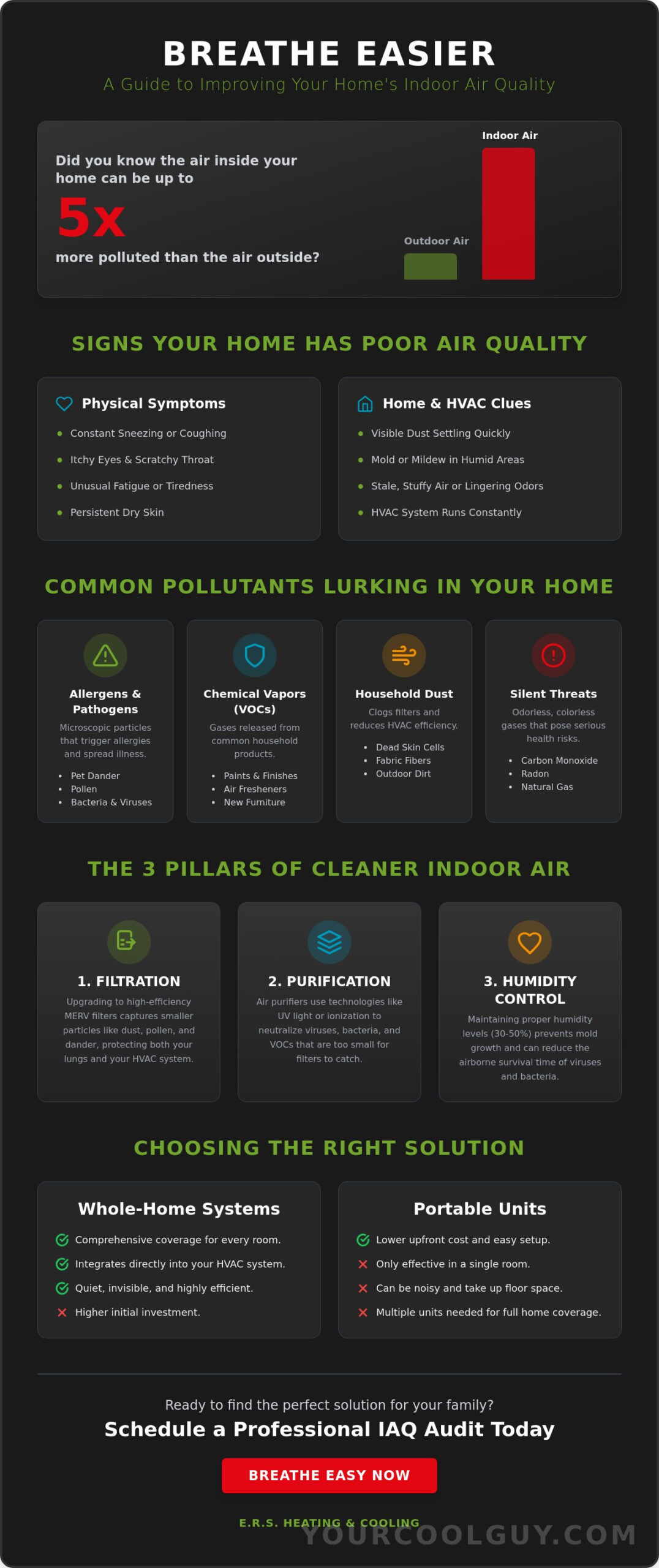
Did you know that the air inside your home can be up to five times more polluted than the air outside? It’s a startling reality for many local families, especially when you’re dealing with the unique dust and allergen challenges of the Wasatch Front. If you’re tired of constant dust on your shelves or waking up with a scratchy throat every morning, you’re definitely not alone. Figuring out how to improve indoor air quality in West Haven is the first step toward turning your living space back into a refreshing retreat.
We agree that your home should be a place of relief, not a source of allergy triggers or lingering odors. This guide discovers the most effective ways to eliminate pollutants and optimize your home’s environment for better health and comfort. We’ll preview the essential strategies for filtration, purification, and humidity control that actually work in our local climate. You’ll finish this article with the confidence that your HVAC system is a powerful tool for your family’s well-being, helping you breathe easier every single day.
Key Takeaways
- Identify how local factors like seasonal inversions impact your home’s air and why standard cleaning isn’t always enough.
- Uncover the “Three Pillars” of indoor air quality to effectively manage biological contaminants and VOCs.
- Learn how to improve indoor air quality in West Haven by upgrading to high-efficiency MERV filters that protect your HVAC system.
- Compare whole-home solutions against portable units to find the most efficient way to achieve a fresher-smelling home.
- See how a professional IAQ audit provides a clear roadmap to eliminating allergy triggers and optimizing your family’s comfort.
What Is Indoor Air Quality and Why Does It Matter in West Haven?
When we talk about Indoor air quality (IAQ), we’re looking at the health and comfort levels of the air inside your home. It’s a simple concept with a huge impact on your daily life. Think about that heavy, “stuffy” feeling that hits when you walk into a room that’s been closed up too long. That isn’t just a lack of a breeze; it’s a direct symptom of poor ventilation and trapped pollutants. For local families, knowing how to improve indoor air quality in West Haven is essential for maintaining a home that feels light, fresh, and healthy.
Poor air quality doesn’t just make a room feel gross. It affects your body in real time. Immediate effects might look like itchy eyes, a persistent cough, or feeling unusually tired while you’re relaxing on the couch. If these issues aren’t addressed, they can evolve into long-term health concerns. We’re talking about chronic respiratory issues or even cardiovascular stress. Your home should be the place where your body recovers, not where it faces its toughest environmental challenges.
The Utah Factor: Inversions and High Desert Dust
West Haven residents deal with a unique set of environmental hurdles that most of the country doesn’t have to worry about. During the winter, the Ogden area often experiences temperature inversions that trap pollutants at the valley floor. This creates a thick layer of smog that’s incredibly hard to escape. Combine that with our high desert climate and powerful canyon winds, and you have a recipe for air quality issues. West Haven is surrounded by open fields and growing construction projects, which means dust is a constant guest. These outdoor pollutants eventually migrate through tiny cracks and poorly sealed windows, turning your indoor space into a collection point for local grime.
Signs Your West Haven Home Has Poor Air Quality
You don’t always need a lab kit to tell if your air is struggling. Often, the signs are right in front of you. Pay attention to your physical health first. If you find yourself sneezing more often or dealing with dry skin and a scratchy throat that won’t quit, your air might be the culprit. Visual cues are just as telling. If you see visible dust settling on your furniture just hours after cleaning, or if mold starts appearing in high-moisture spots like laundry rooms, it’s time to take action. Even your equipment can tell a story. If your furnace or AC is running constantly but the air still feels “stale” and flat, your system is likely struggling to filter out the junk. Understanding how to improve indoor air quality in West Haven begins with recognizing these everyday warnings.
Common Pollutants Lurking in Your Home Air
Your home might look spotless, but looks can be deceiving. Most of the things that make us sneeze or feel sluggish are invisible to the naked eye. In fact, indoor sources are often the primary cause of indoor air quality problems, according to the EPA. When you’re looking at how to improve indoor air quality in West Haven, you first have to know what you’re fighting. It isn’t just “dirt.” It’s a complex mix of biological matter and chemical vapors that settle into your rugs and circulate through your vents.
Let’s talk about household dust. It’s mostly made of dead skin cells and fabric fibers. While that sounds a bit gross, the real issue is what it does to your HVAC efficiency. To minimize these particles, keeping your linens and clothing clean is vital; for those looking for professional-grade results, Prescott’s Laundry is an excellent example of a service that removes deep-seated dust and lint from household fabrics before they ever reach your air vents. When dust builds up on your internal components, it forces your furnace or AC to work twice as hard. This kills your energy efficiency and eventually leads to avoidable wear and tear. Beyond dust, you also have to watch out for odorless pollutants like carbon monoxide and radon. These silent threats are impossible to detect without specialized sensors but can have a massive impact on your long-term health.
Allergens and Pathogens
Pet dander and pollen are the heavy hitters of the allergy world. These microscopic particles have jagged edges that let them hook into carpet fibers and upholstery. Once they’re in, every step you take kicks them back into the air. Bacteria and viruses also hitch a ride on these particles, moving through your ductwork and spreading from room to room. Scheduling a professional hvac service Ogden homeowners trust is a great way to identify where these biological threats are hiding and ensure your system is actually cleaning the air, not just moving the mess around.
Chemical Vapors and VOCs
Then there are Volatile Organic Compounds, or VOCs. These are the chemical “off-gassings” from your favorite air fresheners, new furniture, and even that fresh coat of paint. Modern West Haven homes are built to be incredibly airtight to meet current energy codes. While this is great for your utility bill, it’s tough on your lungs because it traps these chemicals inside for longer periods. You can fight back by choosing low-VOC products and ensuring your ventilation is up to par. If you’re tired of that “stale” air feeling, it might be time to check out our Indoor Air Quality Solutions to see how we can help you refresh your space.
Top Strategies to Purify Your Indoor Environment
Cleaning your air isn’t just about opening a window; it’s about a coordinated attack. We look at IAQ through three specific pillars: source control, ventilation, and air cleaning. By managing these three areas, you create a comprehensive shield for your home. There are plenty of ways to improve indoor air quality that you can start today. The most effective approach combines daily habits with professional-grade technology. In West Haven, where the environment outside is often harsh, your indoor strategy needs to be even tougher.
Humidity control is another vital piece of the puzzle. Utah’s high desert air is notoriously dry. When your home’s humidity drops too low, your skin and throat suffer. Dust also becomes more buoyant in dry air, making it easier to inhale. Maintaining a balanced humidity level keeps dust settled and your respiratory system hydrated. It’s a major win for your overall comfort and helps your HVAC system run more efficiently.
Source Control and Ventilation
The smartest move you can make is stopping pollutants before they ever get inside. This is source control. It means keeping shoes at the door and using low-VOC products. Ventilation is the next step. While “natural ventilation” sounds great, you have to be careful. During winter inversions, opening a window can actually let in more smog than fresh air. Instead, rely on your home’s mechanical ventilation. Use exhaust fans in your kitchen and bathrooms to pull stale air and moisture out before they can settle into your furniture.
Advanced Filtration and Purification
Your HVAC filter is your home’s first line of defense. Most homeowners find the “sweet spot” with a MERV 11 or 13 filter. While a MERV 8 catches basic dust, a MERV 13 is dense enough to trap bacteria and smoke particles. Just be careful; a filter that’s too thick can choke your furnace motor if it’s not designed for it. In fact, many calls for emergency hvac repair Davis County residents make are caused by neglected, clogged filters that overheated the system.
For those who want the gold standard, whole-home air purifiers and UV lights are the answer. These systems integrate directly into your ductwork. UV lights kill pathogens mid-air by disrupting their DNA, while air scrubbers actively seek out contaminants on surfaces. It’s a proactive way to ensure every cubic foot of air in your house is scrubbed clean before it reaches your lungs. This is exactly how to improve indoor air quality in West Haven without spending every weekend with a vacuum in your hand.
Whole-Home Systems vs. Portable Air Purifiers
Deciding between a portable unit and a whole-home system is the most common crossroad for homeowners. If you’re researching how to improve indoor air quality in West Haven, you’ve likely seen the towers of portable purifiers at the big-box stores. They’re popular because they’re easy to buy, but they only tackle one room at a time. A whole-home system, on the other hand, treats every single cubic foot of air that moves through your ductwork. It’s the difference between cleaning a single rug and having a professional cleaning crew handle the entire house.
Maintenance is where the two options really diverge. With portable units, you’re often tracking three or four different filters across multiple rooms. It’s a lot to manage. A whole-home solution is usually integrated into your HVAC system, meaning you only have one central point to maintain. There’s also the noise and aesthetic factor. Portables can be loud and take up valuable floor space. Whole-home systems work silently behind the scenes. You won’t see them, and you certainly won’t hear them, but you’ll definitely feel the difference in the air.
Looking at a five-year period, the cost-benefit analysis often favors the whole-home approach for West Haven families. While the initial investment is higher, you aren’t buying expensive proprietary filters for four different machines every few months. You’re also protecting your entire HVAC investment by keeping the internal components cleaner for longer. It’s a smarter, more streamlined way to manage your environment.
When to Choose a Portable Unit
Portable units have their place. They’re the perfect choice for renters who can’t modify their HVAC system. They’re also great for specific “problem rooms,” like a nursery or a home office where you spend ten hours a day. If you go this route, look for a HEPA-certified model to ensure it’s actually catching the small stuff. Just remember that these units can’t filter the air that passes through your furnace, so they won’t stop dust from settling in other parts of the house.
The Power of Whole-Home IAQ Solutions
Whole-home systems like the iWave or UV germicidal lights are the gold standard. These systems use advanced technology to kill pathogens and neutralize odors silently. They integrate perfectly with your existing setup, whether you’re running a traditional furnace or need heat pump repair Clearfield families rely on. It’s a “set it and forget it” solution that works 24/7 to keep your home fresh. If you’re ready to stop managing filters and start breathing better, check out our Indoor Air Quality Solutions today.
Breathe Easy with E.R.S. Heating & Cooling Solutions
Taking the first step toward a healthier home doesn’t have to be overwhelming. You now have the roadmap for how to improve indoor air quality in West Haven, but you don’t have to walk that path alone. At E.R.S. Heating & Cooling, we specialize in turning stuffy, dusty houses into fresh, breathable sanctuaries. Our team doesn’t just install equipment; we provide peace of mind. We’ve spent over 20 years serving families in Weber County, so we understand exactly how our local climate affects your home’s ecosystem.
Our “fast and clean” service philosophy is the backbone of everything we do. We know your time is valuable, and your home is your most personal space. When we perform an Indoor Air Quality audit, we work efficiently and leave your home exactly as we found it, only with much better air. This audit is a comprehensive look at your home’s unique challenges, from ductwork integrity to pollutant levels. It’s the most reliable way to get a customized plan that fits your budget and your family’s health needs.
Our Specialized IAQ Offerings
We provide a full suite of Indoor Air Quality Solutions tailored for the Intermountain West. Our humidifiers are a game-changer for those brutal Utah winters when the air inside becomes bone-dry. We also offer expert installation of UV-C germicidal lamps and electronic air cleaners that catch what standard filters miss. These upgrades work silently within your existing system to neutralize pathogens and allergens before they ever reach your living room. Our two decades of local experience mean we know which technologies actually stand up to our unique dust and inversion cycles.
Start Your Journey to Fresher Air
Scheduling your consultation is a breeze. We believe in transparency and direct communication, so you’ll always know exactly what to expect. Many of our clients find that their air quality journey starts during a routine maintenance visit. For instance, our furnace repair Layton services always include a thorough air quality check to ensure your heating system is helping, not hurting, your IAQ. Regular maintenance agreements are the best way to keep your air pure year-round without having to track filter dates yourself.
Don’t let poor air quality dictate your comfort or health any longer. You deserve a home that feels as fresh as a mountain breeze, regardless of what’s happening outside. Take control of your environment and give your family the gift of clean air. Schedule your West Haven IAQ audit with E.R.S. today!
Take Control of Your Home’s Health Today
You’ve learned that cleaner air isn’t just about scrubbing floors; it’s about a smart, three-pillar approach. By combining source control, proper ventilation, and advanced filtration like MERV 13 filters or UV lights, you can finally eliminate that stuffy feeling for good. Now you have the tools to understand how to improve indoor air quality in West Haven by choosing whole-home solutions that work silently alongside your HVAC system. It’s a simple path to a much more comfortable life.
At E.R.S. Heating & Cooling, we’ve spent over 20 years helping our Utah neighbors breathe easier. As a family-owned and operated business, we treat your home’s air with the same care we give our own. We’re always here when you need us. Whether you want a specialized IAQ audit or find yourself in need of our 24/7 emergency support, we’ll ensure your environment stays safe and healthy. We’re ready to help you ditch the dust and allergy triggers for a fresher living space.
Ready to breathe cleaner air? Contact E.R.S. Heating & Cooling for a West Haven IAQ consultation!
Your family deserves a fresh, odor-free home where everyone can relax and breathe without a second thought. We’re excited to help you make that a reality. Let’s get started today.
Frequently Asked Questions
How often should I change my air filter in West Haven?
You should generally change your air filter every one to three months. In West Haven, our heavy dust and seasonal pollen might require a swap every 30 days to keep your system breathing easy. If you have pets or a large family, check the filter monthly to prevent clogs and maintain efficiency.
Can poor indoor air quality cause allergies to get worse?
Yes, poor air quality is a major trigger for worsening allergy symptoms. Trapped pollutants like pet dander, pollen, and dust mites circulate through your home, causing constant irritation. Cleaning up your air is one of the fastest ways to reduce sneezing and itchy eyes when you are indoors.
Are whole-house air purifiers worth the investment?
Whole-house air purifiers are absolutely worth it for long-term health and comfort. They treat every room simultaneously and require less maintenance than a fleet of portable units. Plus, they keep your furnace and AC cleaner, which helps prevent expensive repairs down the road by reducing internal dust buildup. If you are interested in how professionals maintain these systems, you can discover LALA COOL and their specialized air conditioner cleaning and disinfection techniques.
What is the ideal humidity level for a Utah home in winter?
The ideal humidity level for a Utah home during the winter is between 30% and 50%. Keeping your air in this range prevents dry skin and scratchy throats. It also stops dust from staying airborne, which is a key part of how to improve indoor air quality in West Haven during the dry months.
Do UV lights in HVAC systems actually kill viruses?
Yes, UV lights installed in your HVAC system are highly effective at killing viruses and bacteria. They use specific ultraviolet wavelengths to disrupt the DNA of microorganisms as they pass through the ductwork. This proactive step prevents pathogens from reproducing and spreading through your home’s air supply.
How can I tell if my air ducts need cleaning?
Look for visible dust buildup on your vent covers or a musty smell when the fan kicks on. If your allergies spike every time the heater starts, your ducts might be holding onto years of debris. A quick visual inspection of your return vents usually tells the story of what is hiding inside.
What are the signs of high VOC levels in my home?
High VOC levels often present as lingering chemical smells or “new” odors from furniture and carpet. You might also notice frequent headaches, dizziness, or eye irritation when you’re spending time in a specific room. Modern, airtight homes tend to trap these vapors much longer than older, drafty houses.
Will an air purifier help with the smell of wildfire smoke?
A high-quality air purifier will definitely help neutralize wildfire smoke odors. Look for systems that include an activated carbon filter, as these are specifically designed to trap gaseous pollutants and smells. This is a vital tool for staying comfortable during Utah’s smoky summer days when outdoor air is dangerous.